Research-use-only analytical standards
99.64% median purity, proven on every lot.
Live from 476 COAs and 269 lots — 15 tests on every new batch at independent labs, leftover TFA measured, not assumed. Every result lands on that batch's own Certificate of Analysis.
- 15× Tested Tested 15 tests on every new batch · 476 reports published
- cGMP Aligned manufacturing Manufacturing Quality-managed production systems
- USA Labs · shipping · support Labs & support ISO 17025 labs · ships from Scottsdale, AZ
- 54,361 Registered researchers Researchers Verified research accounts · live count
Ships tomorrow. FedEx 48-hour delivery · 60-day returns
Shop by Category
The quality program · cGMP-aligned manufacturing
From synthesis to certificate.
Finished product is made by contract manufacturers under quality-managed systems. Our leverage is the release program: every new batch is accepted or rejected on 15 tests at U.S. ISO/IEC 17025 labs, and every result is published; earlier batches show their own count. Here is the whole path.
SourcingQualified supplier · incoming QC
- 01 Peptide API & incoming QC Synthesized at a qualified supplier, which checks the raw peptide on receipt: identity, purity, net peptide content, endotoxin. Our own testing starts on the finished product. Proof: Supplier CoA + incoming QC
PreparationClassified cleanrooms
- 02 Component prep Type I glass washed and depyrogenated by dry heat; sterile lyophilization stoppers, dried and validated. Proof: Validation summary
- 03 Compounding API dissolved in Water for Injection in a closed, sanitized vessel; bioburden checked before filtration. Proof: Batch record
Aseptic coreSterile core · ISO 5
- 04 Sterile filtration Redundant 0.22-micron sterilizing-grade filters, integrity-tested before and after every batch. Proof: Filter integrity records
- 05 Aseptic fill Filled under unidirectional ISO 5 airflow with every fill weight verified; stoppers part-seated for drying. Proof: Media-fill summary
- 06 Lyophilization A formulation-specific freeze-dry cycle; stoppered inside the chamber under sterile nitrogen, before the vial ever leaves the core. Proof: Cycle + moisture record
FinishingControlled environment
- 07 Cap & crimp Aluminum overseal crimped under a Grade A air supply; seal force checked. Proof: Batch record
- 08 100% inspection Every single vial inspected for particulates, container defects and cake quality. Proof: Inspection record
- 09 Closure integrity Deterministic container-closure integrity testing confirms the seal holds all the way to you. Proof: CCIT report
Independent verificationISO/IEC 17025 labs
- 10 QC release & lot CoA The layer we own outright: independent testing at accredited U.S. labs — sterility (USP <71>), endotoxin (USP <85>) and the full panel — landing on a public, per-lot Certificate of Analysis. Read every certificate →
The quality-systems layer runs through every stage: executed batch records, continuous environmental monitoring, aseptic process simulations, and QA review with formal change control.
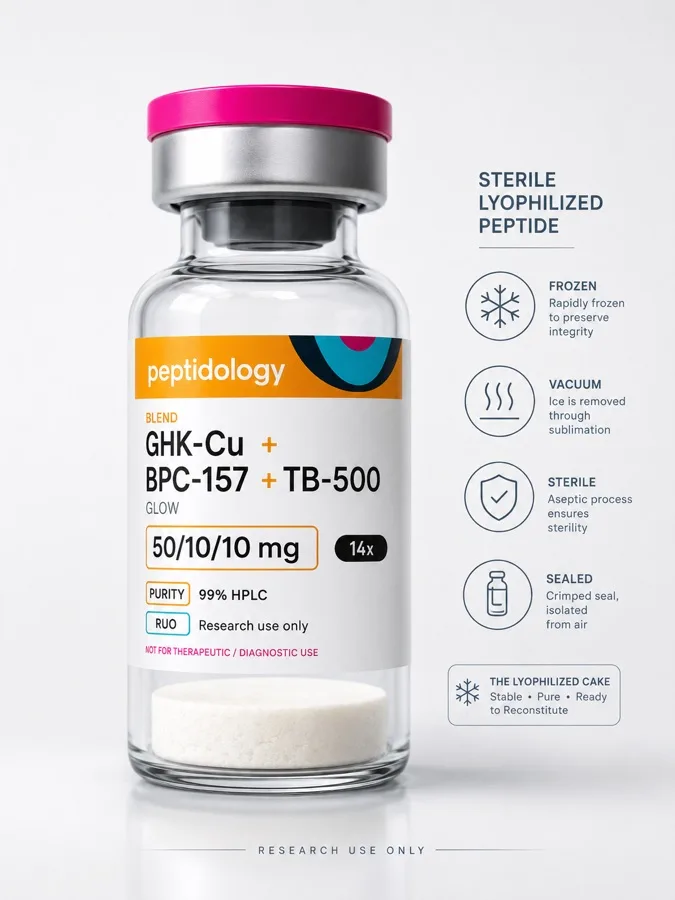
- 476 independent lab reports published
- 4,051 vials tested, every one third-party
- 254 / 254 lots passed sterility — zero failures
- 0 limits exceeded across 109 metal & 127 solvent screens — worst reading ever: 0.01% of its limit
Tested at Vanguard Laboratory · Eagle Analytical Services Inc. + 1 more Read every certificate
Each step answers to a test
- Did the fill stay sterile? Sterility at two independent labs — USP <71> and ScanRDI · 254 / 254 lots pass
- Did the seal hold? Container-closure integrity by dye ingress, every lot
- Did synthesis leave anything behind? Residual solvents by GC-MS, residual TFA by ion chromatography
- Is the cake right? Reconstitution check, and HPLC assay against the label claim
Live figures, computed from the certificate library. For research use only. Not intended for diagnostic or therapeutic use.
Most ordered by researchers
Top sellers.
 Closeout - Sale
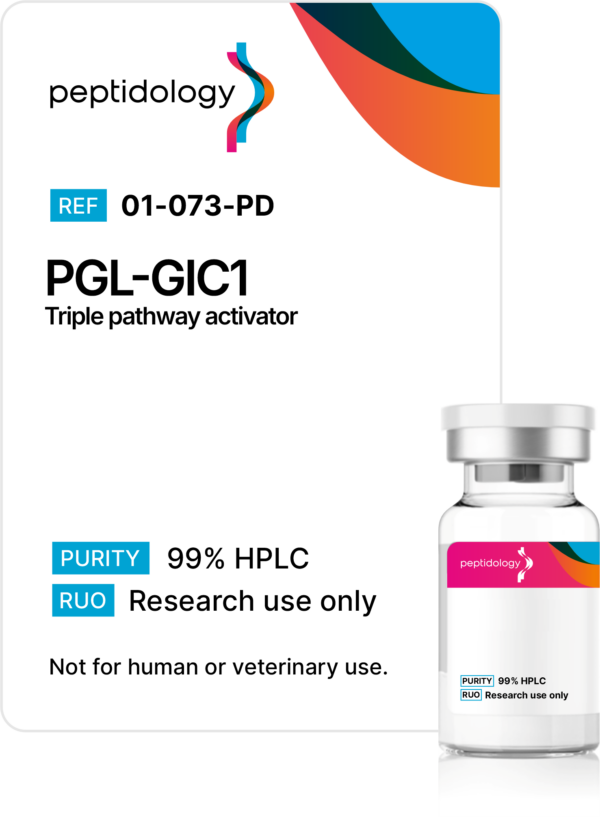
 PGL-GIC1
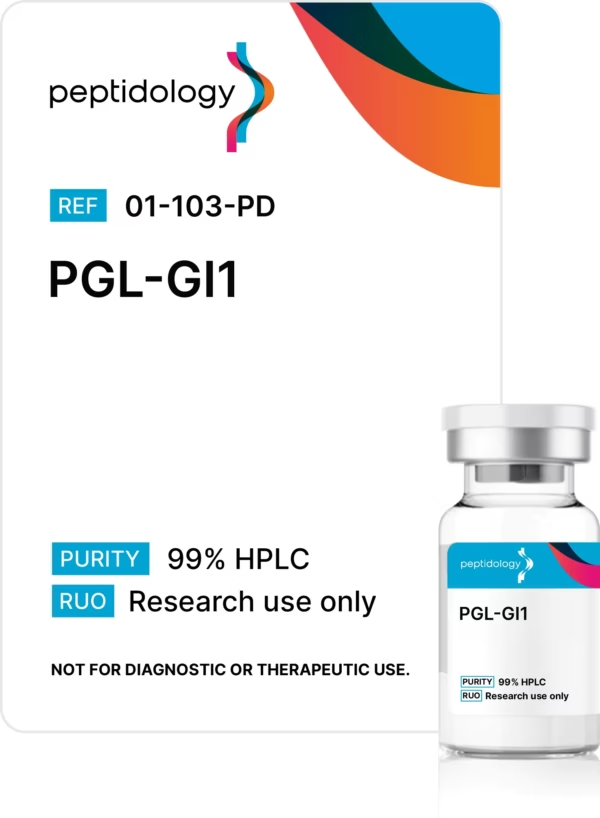
PGL-GI1
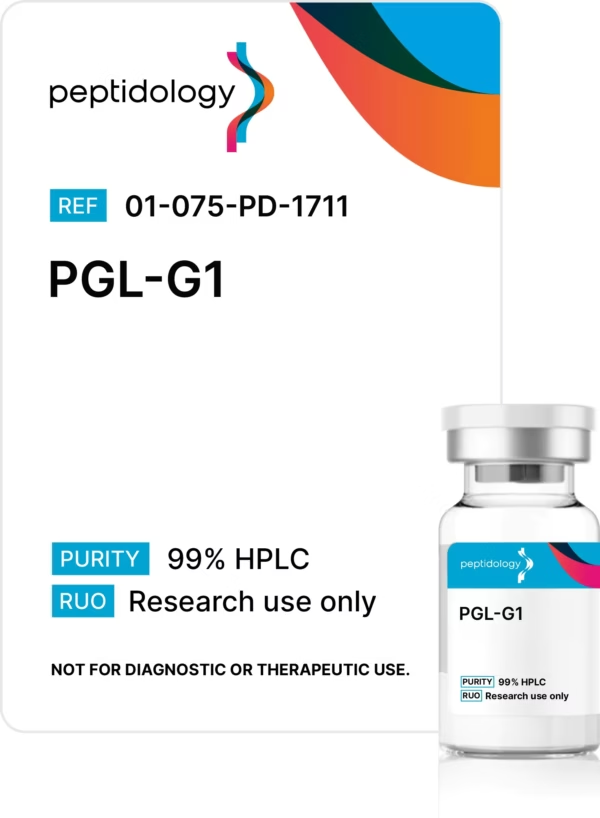
PGL-G1
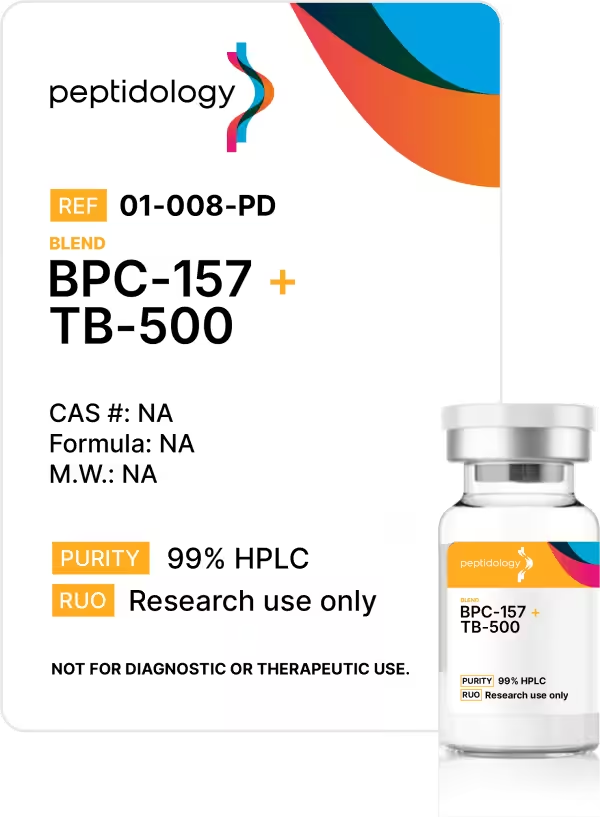
BPC-157, TB-500 (Blend)
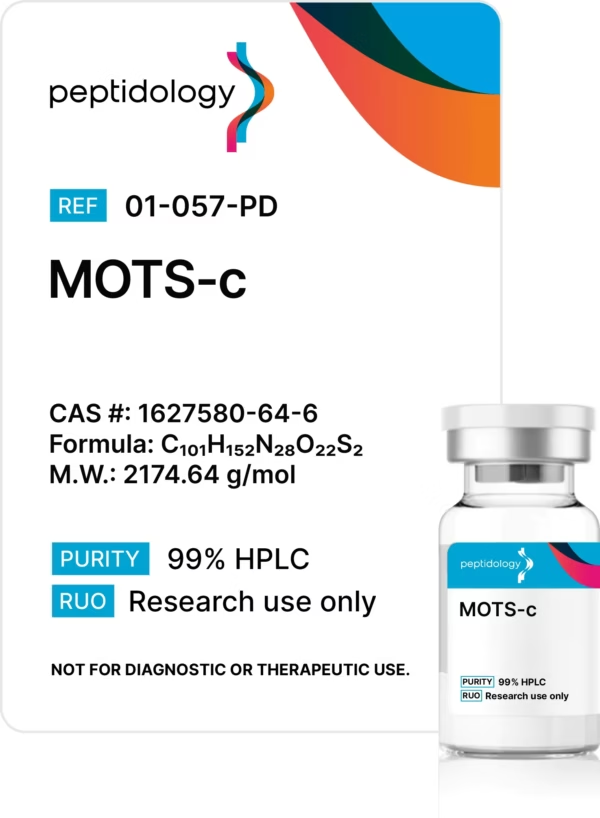
MOTS-c
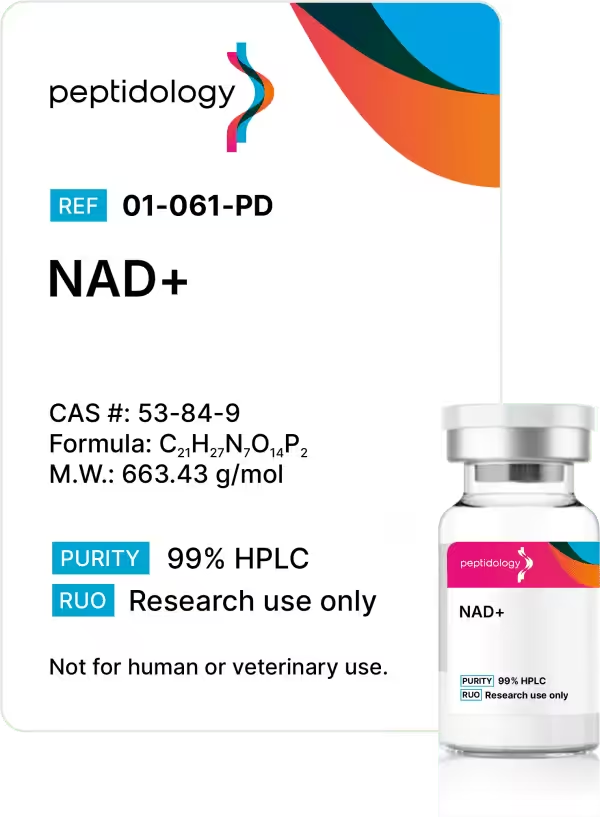
NAD+
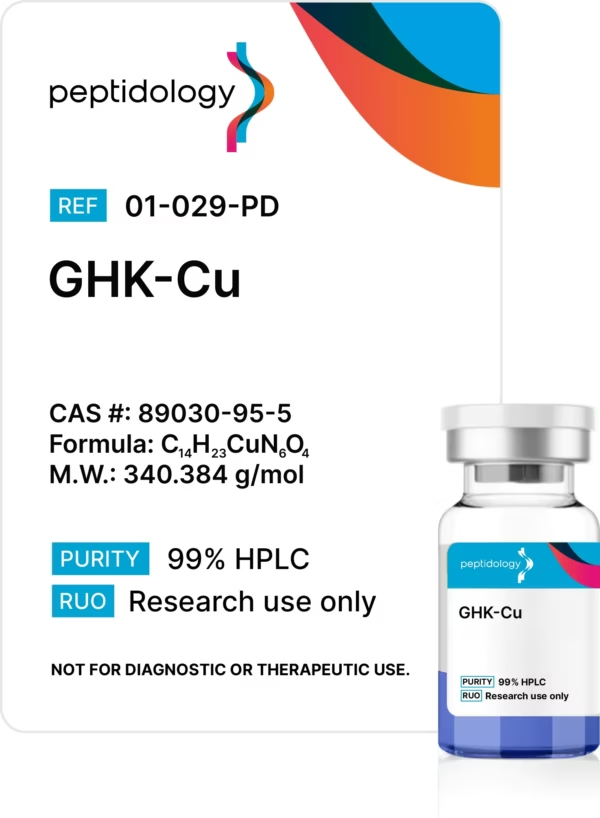
GHK-Cu Copper Peptide
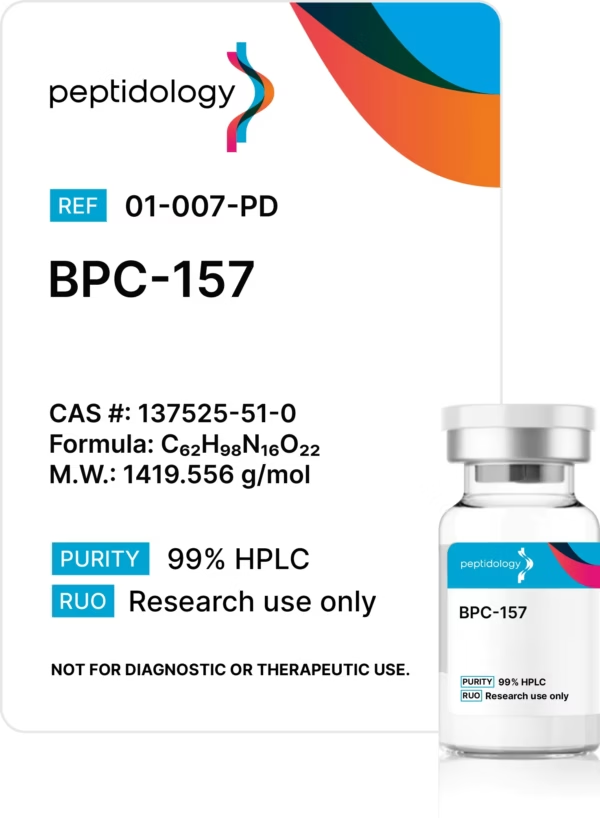
BPC-157
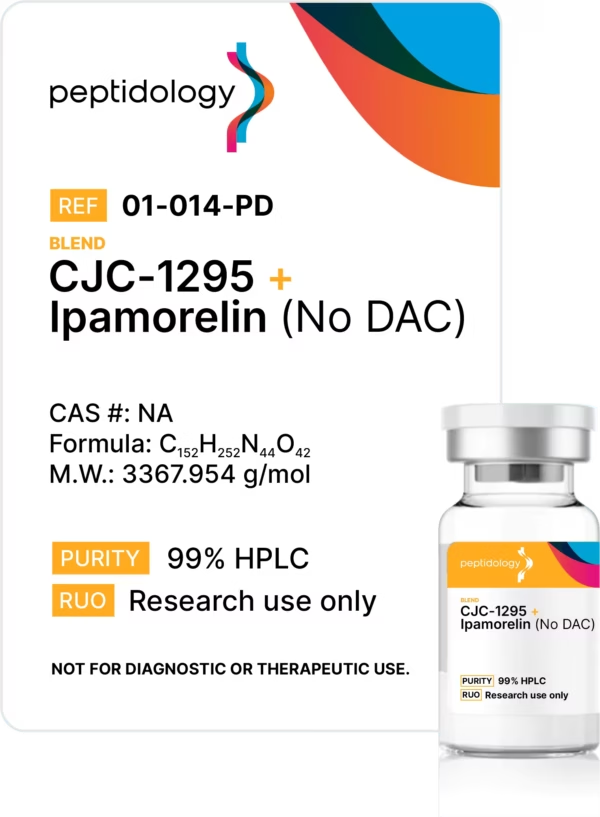
CJC No DAC IPA Blend
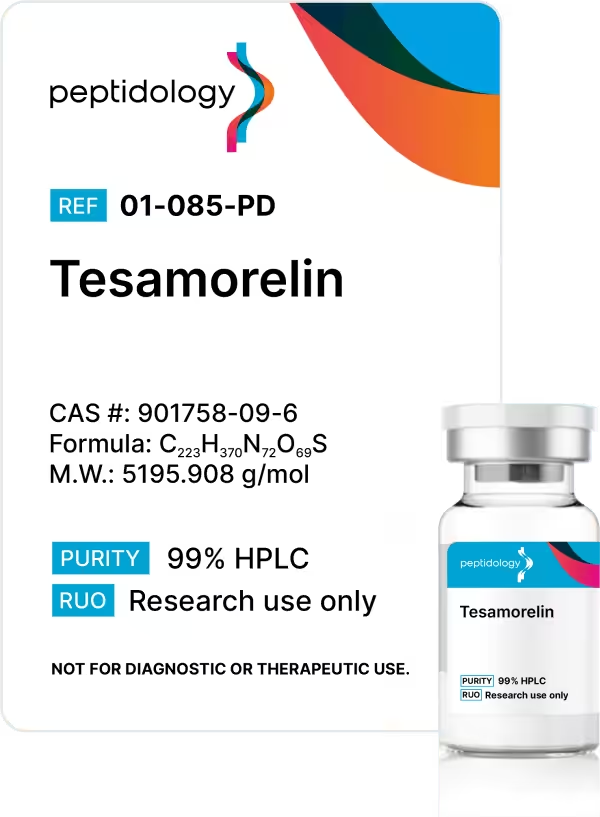
Tesamorelin
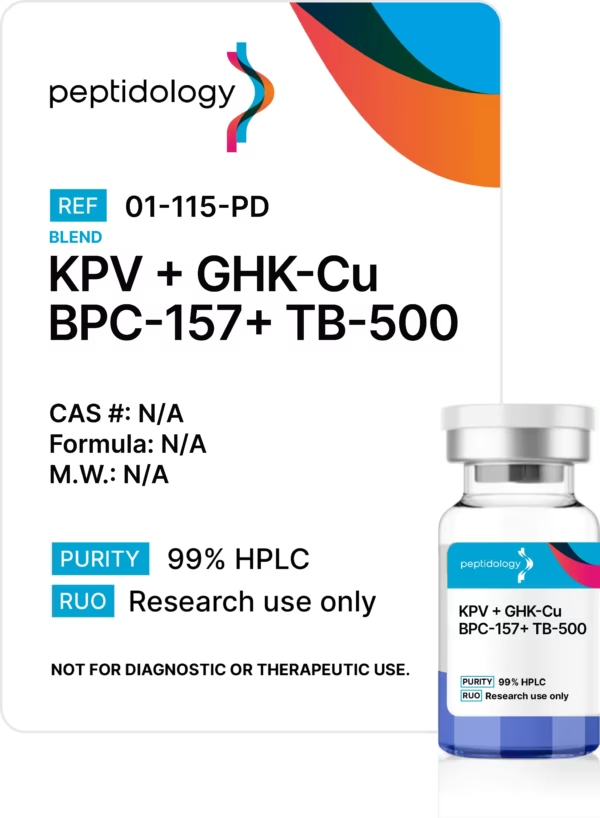
KLOW Blend
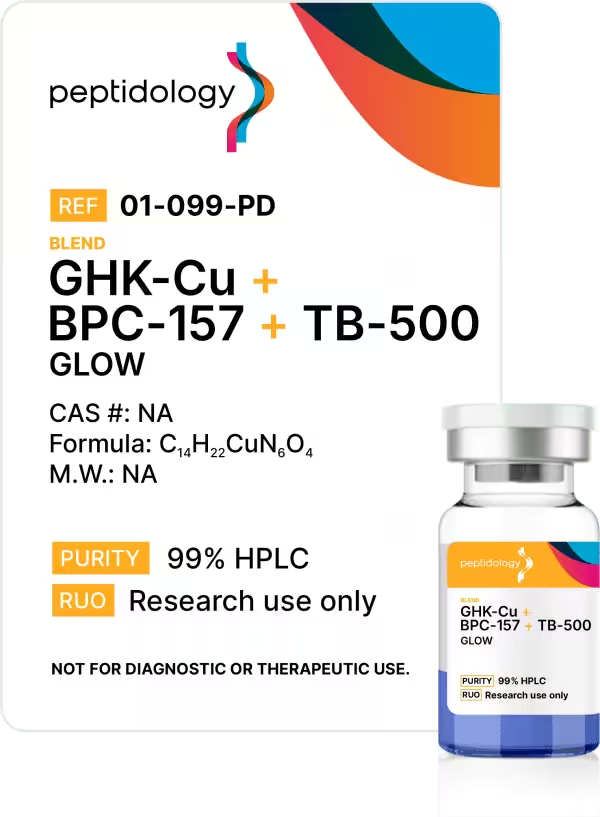
GLOW Blend
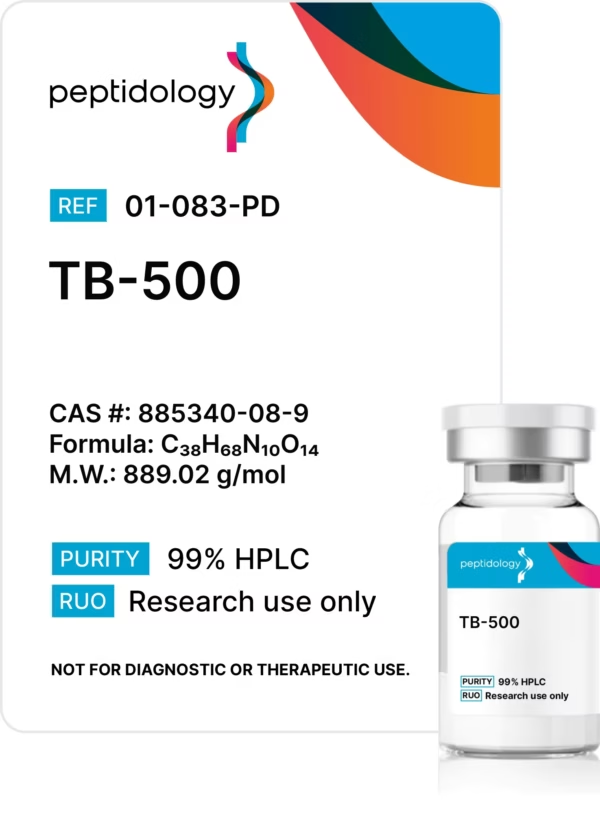
TB-500